Explore decision engines for urban infrastructure, from traffic-signal decisions to automated operational workflows. DecisionNode provides decisions that connected systems can act on.
Where this stands: Decisions for connected city systems: an application direction for DecisionNode and Detector24.

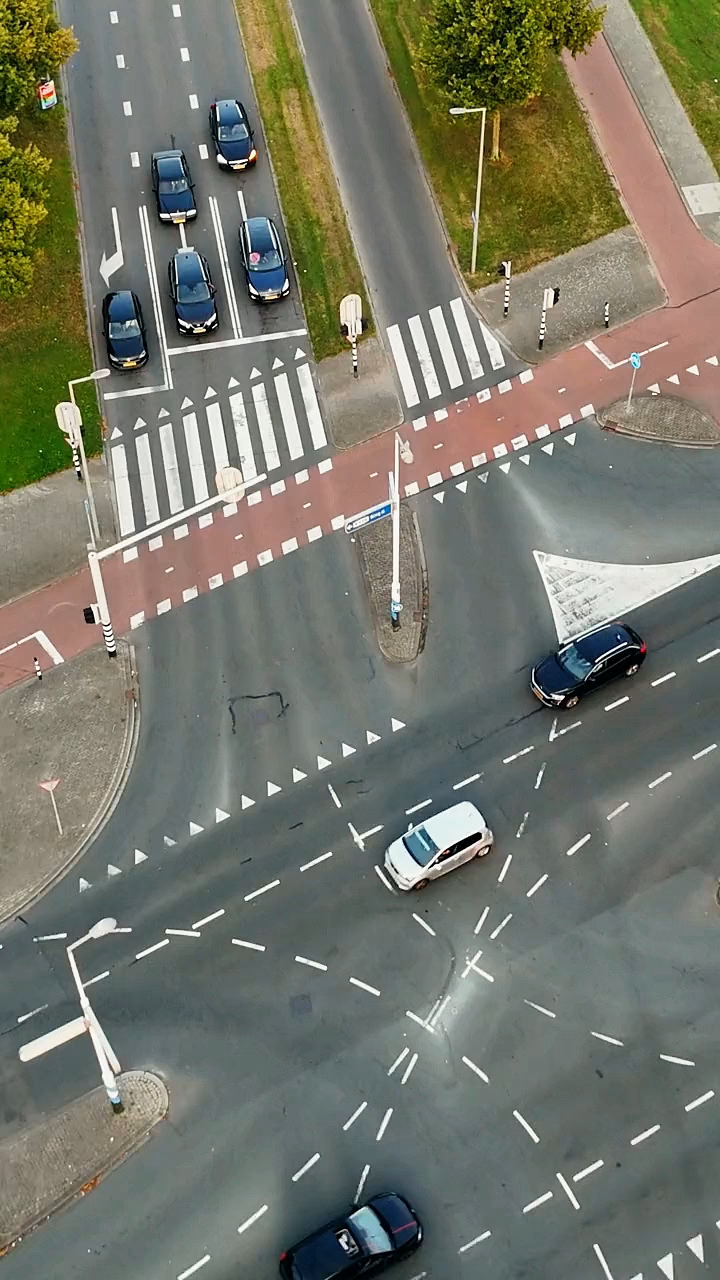
Sample junctionJunction 12, northbound
- Northbound queue: long
- Decision: extend greenConfidence: high
A city makes millions of small decisions a day.
How long a signal stays green, which pothole report is urgent, where a maintenance crew goes next. Most of these decisions follow fixed timetables and queues that cannot see what is happening on the street right now.
Cities already collect the inputs: camera feeds, sensor data, reports with photos. A decision engine turns those inputs into choices that existing control and workflow systems can carry out.

What cities answer to
Safety-critical infrastructure
AI used as a safety component in road traffic management is classed as high-risk under the EU AI Act. Any such system needs integration, evaluation and oversight before it acts.
Privacy in public space
Cameras in public places capture people who never agreed to be analyzed. Processing should be limited, and faces redacted where they are not needed.
Public accountability
Residents expect to understand why the systems around them behave as they do.
Where a decision engine fits

Application direction
Traffic-signal decisions
DecisionNode can interpret camera frames at a junction and return a timing decision for the signal controller to apply within its safety limits.
Application direction
Report triage
Photos and descriptions submitted by residents can be classified and routed to the right department with a priority.
Application direction
Privacy-preserving imagery
Detector24's catalogue includes face redaction, vehicle detection and people counting, so imagery can be used for operations without exposing who is in it.
Application direction
Operational workflows
Decisions trigger the next step in maintenance and service systems, with a person reviewing anything uncertain.
A junction that sees its own traffic
An application direction, described to show the role of a decision engine. It is not a deployed or certified traffic-control system.
A camera at the junction streams frames; DecisionNode sessions keep the context from one frame to the next.
DecisionNode estimates queue lengths and returns a typed timing decision with its confidence.
The signal controller applies the decision only within its own safety rules and fixed limits.
Engineers monitor the decisions and their effect before widening their use.
In
- Current frame
- Session context
Out
- Northbound queue: long
- Decision: extend greenConfidence: high


Questions from city teams
Does DecisionNode control traffic signals?
It returns a timing decision, and the signal controller applies it within its own safety limits. Any use at a junction needs integration and evaluation first, and no certified traffic-control system is claimed.
Can city imagery be used without exposing people?
Detector24's catalogue includes face redaction, vehicle detection and people counting, so imagery can support operations without revealing who is in it.
Is any of this running in a city today?
No municipal deployment is described. Smart-city uses are application directions for DecisionNode and Detector24.
Other industries
All industries



Talk to Bynn about your city's infrastructure.
Bring the decision your systems make on a timetable today. We will explore what it would take to make it with live information.